Prophecy of Melkin
Melkin, conjectured to come from Maelgwn, the name of a 6th-century Welsh king
A medieval Latin prophecy of a hidden grave at Glastonbury
A short Latin prophecy preserved in a 14th-century chronicle from Glastonbury, in England, announcing a hidden grave of Joseph of Arimathea there, with the Holy Grail inside it. The chronicle ascribes it to Melkin, a Celtic bard said to have lived before Merlin.
- Survives in John of Glastonbury's chronicle, written in the mid-14th century
- Names Melkin, a Celtic bard said to have lived before Merlin, as its author
- Concerns a hidden grave of Joseph of Arimathea at Glastonbury, holding the Grail
- Its name may come from Maelgwn of Gwynedd, a 6th-century Welsh king
- Gerald of Wales, around 1193, tells of a Welsh bard foretelling Arthur's grave
What it is
The Prophecy of Melkin is a short Latin text carried inside a chronicle from Glastonbury, in England. It announces a hidden burial: the grave of Joseph of Arimathea, said to lie at Glastonbury and to hold the Holy Grail. The chronicle presents the words as the work of Melkin, a Celtic bard placed in time before Merlin. It is a foretelling rather than a rite, with no ceremony attached, and it belongs with the Grail and Arthurian legends that gathered around Glastonbury in the Middle Ages.
Where it comes from
The text survives in the Cronica sive antiquitates Glastoniensis ecclesiae, a local chronicle by John of Glastonbury from the mid-14th century, who names Melkin as the author. Its making is thought to belong with legends current in England from the mid-13th century, which joined Joseph of Arimathea to the mythical Avalon, to Glastonbury and to King Arthur's court. An older story may lie behind it: the discovery of Arthur's supposed grave at Glastonbury around 1191, which Gerald of Wales, writing about 1193, said an ancient Welsh bard had foretold.
Prophecy of Melkin, drawn and placed
- Living
- Revived
- Fading
- Historical
- Legendary
- Performed
- Lineage
- Glastonbury chronicle writing and Arthurian Grail legend
What it is for
The prophecy exists to point to a grave: Joseph of Arimathea's, hidden at Glastonbury and holding the Grail. It is framed as an old foretelling rather than a record, so the burial it names lies ahead of the speaker in time. Nothing in it is a rite or an instruction, and its claim is about place and burial. It is thought to have grown out of the same legends that tied Joseph, Avalon and Glastonbury together.
Who does it
Melkin, the supposed author, is described as a Celtic bard, said to have lived before Merlin. John of Glastonbury is the compiler who set the prophecy in his chronicle. The 16th-century antiquary John Leland called Melkin a famous and learned ancient British writer of Welsh origin, and claimed to have seen old fragments of a History of Britain by him at Glastonbury. John Bale and John Pitts, in the 16th and 17th centuries, placed him in the mid-6th century, the period linked with Arthur.
Peoples and places
The prophecy belongs to Glastonbury, in England, and to the monastic chronicle written there. Its attributed author is Celtic and, in Leland's account, Welsh. Its later readers were English chroniclers and antiquaries: John Hardyng in the mid-15th century, Leland in the 16th, then Bale and Pitts. The kindred story of a Welsh bard foretelling Arthur's grave is also set in Britain, and both tales place hidden burials in the same ground.
At a glance: who, where and when
Who does it
Belief worlds
What people believe
Behind the text sit several linked claims: that Joseph of Arimathea came to Glastonbury, that his grave lies hidden there, and that the Holy Grail rests with him. Avalon, the island of Arthurian story, is drawn into the same picture alongside Glastonbury and Arthur's court. The weight of the prophecy rests on its speaker, a bard set before Merlin, whose words are presented as coming from a distant past.
How scholars and sceptics see it
Writers have tried to trace the name. It has been conjectured that Melkin comes from Maelgwn of Gwynedd, a 6th-century Welsh king also remembered as a bard and a prophet. The prophecy itself is read as a product of the mid-13th-century legends about Joseph, Avalon and Arthur, and as related to the earlier account of Arthur's grave at Glastonbury, said to have been foretold by a Welsh bard and reported by Gerald of Wales around 1193.
Compare and confuse
The Prophecy of Melkin is related to an earlier Glastonbury foretelling: the prediction, recorded by Gerald of Wales around 1193, that King Arthur's grave would be found, said to have been fulfilled around 1191. Both stories credit an old Welsh bard with knowledge of a hidden burial. The name Melkin is conjectured to come from Maelgwn of Gwynedd, a 6th-century Welsh king remembered as a bard and prophet.
Questions people ask about Prophecy of Melkin
What is the Prophecy of Melkin?
A short Latin text, kept in a chronicle from Glastonbury, that announces a hidden grave of Joseph of Arimathea at Glastonbury with the Holy Grail inside it. It is presented as the foretelling of an old Celtic bard.
Where does it come from?
It appears in the Cronica sive antiquitates Glastoniensis ecclesiae, a local chronicle by John of Glastonbury from the mid-14th century. It is thought to have been shaped by legends current in England from the mid-13th century.
Who was Melkin?
The bard to whom the chronicle attributes the prophecy, said to have lived before Merlin. John Leland described him as a learned ancient British writer of Welsh origin, and other writers placed him in the mid-6th century.
What does it foretell?
That the grave of Joseph of Arimathea lies hidden at Glastonbury with the Grail. The claim is framed as an old prediction, so the burial it names is said to be known long before it is found.
Is it linked to King Arthur?
It shares ground with Arthurian legend. An earlier story said an ancient Welsh bard foretold the finding of Arthur's grave at Glastonbury around 1191, and the legends joining Joseph, Avalon and Arthur's court are thought to lie behind the prophecy.
Good reading and sources
The facts on this page come from the Wikipedia article "Prophecy of Melkin", written by its contributors and used under the CC BY-SA 4.0 licence, and from its Wikidata record (CC0). EveryJaadu rewrote the text in its own words, with AI assistance, and compares every page with the article to make sure no passage is copied. It may be reused under the same CC BY-SA 4.0 licence with a link back.
It may contain mistakes. Names and customs differ from one community to the next, and some knowledge is closed to outsiders and left out here. This page describes belief and practice. It does not say that any of it works, it is not a how-to, and it is not medical advice. If something is wrong, tell us. Last refreshed 2026-10-22.
More from the United Kingdom
All the entries from the United Kingdom 🇬🇧 United KingdomWilliam Lilly
A seventeenth-century English astrologer and author who shaped Western tradition.Text · Seeing and foretelling · Power and authority Historical
 🇬🇧 United KingdomMother Shipton
An English prophetess and herbalist from folklore, known for predictions printed long after her death.Figure · Seeing and foretelling · Healing Historical
 🇬🇧 United Kingdom and 5 moreAleister Crowley
English occultist and founder of the religion of ThelemaText · Power and authority · Change and initiation Living
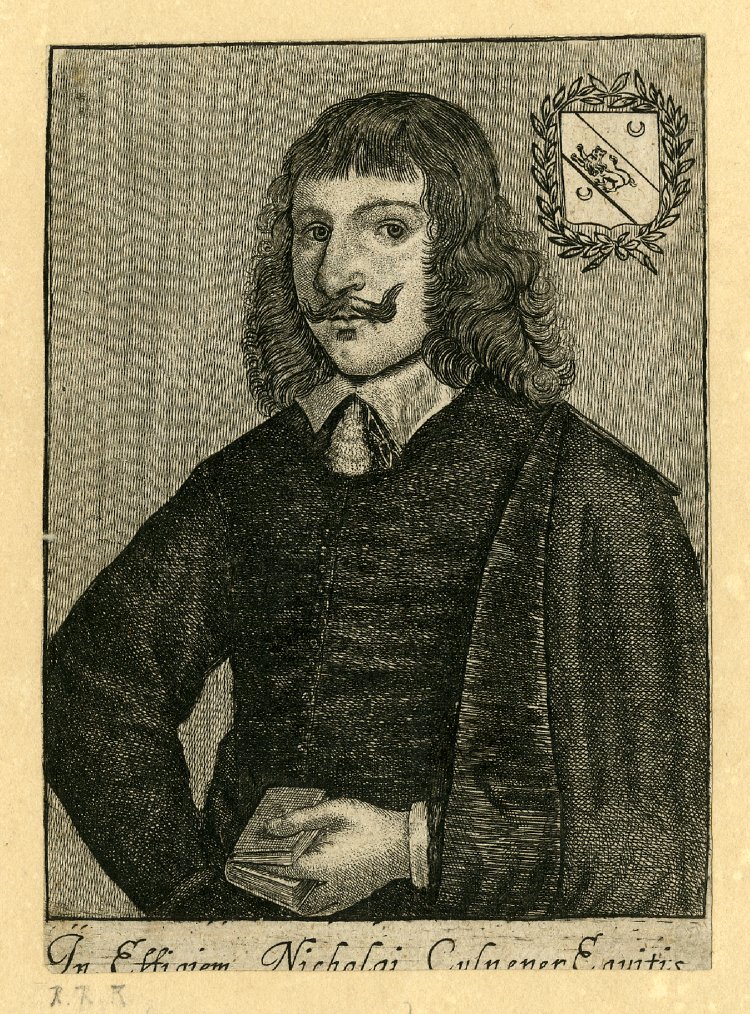 🇬🇧 United Kingdom and 1 moreNicholas Culpeper
An English herbalist and astrologer who translated medical texts into English for the poor.Text · Healing · Power and authority Historical
Related elsewhere
All text 🇮🇶 Iraq and 4 moreAstrology
A system of divination that links human affairs to the positions of celestial bodiesTradition · Seeing and foretelling · Luck and prosperity Living
 🇮🇳 India and 3 morePalmistry
A divination practice that reads the lines and shapes of the hand to predict fate or characterOracle · Seeing and foretelling · Luck and prosperity Living
 🇸🇾 SyriaMetoposcopy
A divination method that reads personality and fate from forehead linesOracle · Seeing and foretelling Historical
 🇲🇬 MadagascarSikidy
An algebraic geomancy practiced by Malagasy peoples using seeds to read fate and prescribe remediesOracle · Seeing and foretelling · Protection Living