Jewish views on astrology
In its own language: חָכְמַת הַמַּזָּלוֹת
from Hebrew ḥakhemat ham-mazzalot, meaning 'the science of the constellations'
A long-standing debate within Jewish thought about the influence of stars and planets
Astrology has been a subject of discussion among Jews for over two thousand years. While not a core teaching, it appears in ancient texts like the Talmud and Hebrew Bible, sparking varied opinions among scholars.
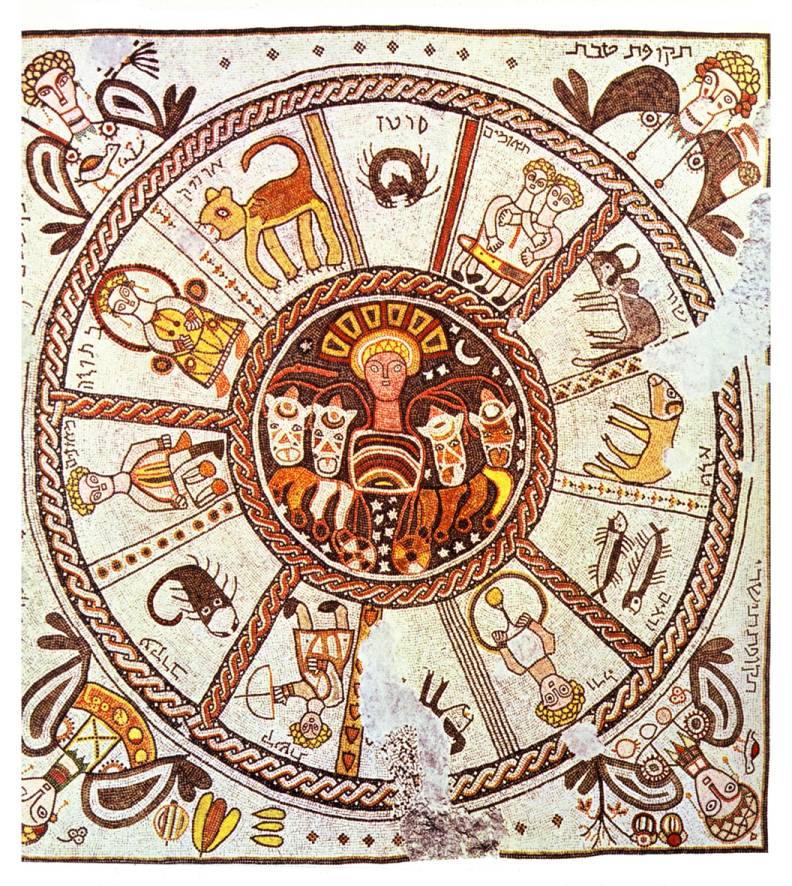
- Zodiac mosaics found in ancient synagogues like Beth Alpha
- Abraham exempted from astrology due to his covenant with God
- Samuel of Nehardea studied astrology but deemed it incompatible with Torah
- Talmudic rabbis debated whether stars control Israel's fate
- Hebrew term mazzalot means constellations
What it is
Astrology occupies a complex space in Jewish history, debated by scholars for millennia. It is not a central tenet of the faith but has influenced thought through texts like the Talmud. Opinions have ranged from acceptance of its validity to complete rejection. Some viewed it as a meaningful practice, while others dismissed it as invalid or forbidden. The topic remains a point of scholarly interest, reflecting the tension between celestial influence and divine will.
Where it comes from
The concept entered Jewish discourse during the Second Temple period, likely through Hellenistic influence. Archaeological evidence includes zodiac mosaics in ancient synagogues, such as at Beth Alpha, featuring solar deities and seasonal signs. Josephus noted that Greek philosophers learned celestial knowledge from Egyptians and Chaldeans. Early Jewish literature rarely discussed planets until later periods, when astrological ideas became more integrated into rabbinic discussions.
How it is done
Practitioners analyzed planetary positions and constellations to determine luck or character traits. Rabbi Yehoshua ben Levi linked birth days to personality, while R' Hanina attributed traits to planetary influence. Astrologers warned against specific actions on certain days, such as drinking water on Tuesday evenings or bleeding patients under Mars. These practices were treated as serious sciences by some, who believed stars dictated inclinations and events.
Tools and materials
Key symbols included the twelve signs of the zodiac and seven planets. Mosaics depicted Helios surrounded by zodiac signs and seasons. Astrological tablets were used for predictions. Constellations like Orion (Kesil) and the Pleiades were named in biblical texts. The term mazzalot referred to constellations themselves, forming the basis for astrological interpretation in rabbinic literature.
Jewish views on astrology, drawn and placed
- Living
- Revived
- Fading
- Historical
- Legendary
- Performed
- Lineage
- Jewish religious thought
What it is for
Astrology was used to foresee personal fate, national events, and auspicious times. It aimed to explain character traits and predict outcomes based on celestial movements. Some sought advice from astrologers for guidance. However, many rabbis argued that Israel was exempt from stellar determinism due to their covenant with God. The purpose often centered on understanding divine order rather than controlling fate.
Who does it
Scholars and rabbis engaged with astrology as a subject of debate. Samuel of Nehardea, a physician and astrologer, studied it seriously but deemed it incompatible with Torah. Other sages like Rabbi Akiva prohibited consulting astrologers. Abraham was said to have known astrology, though he was also considered a prophet above stellar influence. Modern scholars often favor scientific explanations over these traditional views.
Peoples and places
Jewish communities across Israel, Egypt, Spain, France, the UK, and Syria have historical ties to these debates. Ancient Israelites integrated celestial references into their society. Josephus highlighted connections between Jewish and Chaldean knowledge. Rabbinic literature in Babylonia and Israel used different terms for astrologers, reflecting regional variations. The practice was viewed differently across cultures, from heir to Chaldean wisdom to a forbidden art.
At a glance: who, where and when

What people believe
The worldview balances free will with celestial influence. Some believe stars grant inclinations, but humans can overcome them. Abraham’s story illustrates exemption from astrological fate, emphasizing divine intervention. Prophets rejected deterministic star-gazing, asserting God’s sovereignty. The belief system holds that while stars may affect nations, Israel’s covenant provides unique spiritual elevation beyond stellar control.
When it is done
Specific days and lunar phases were considered significant. Tuesday and Friday evenings were seen as dangerous for drinking water. Bleeding was avoided on Tuesdays, Mondays, Thursdays, and new moons. Birth days were linked to character traits. Festivals and the third of the month were also marked as unfavorable for medical procedures. These timings reflected a belief in cosmic rhythms affecting daily life.
How scholars and sceptics see it
Anthropologists and historians note astrology’s role in ancient civilizations. Jacob Neusner observed that rejecting occult sciences would have ignored contemporary technological achievements. Modern institutional scholars often favor science over archaic beliefs. Devout religious Jews outside academia sometimes maintain pro-astrology views. Scholars debate whether biblical references support or contradict astrological practice, highlighting interpretive differences.
Cautions and what is closed
Some rabbis prohibited consulting astrologers, viewing it as contrary to faith. Deuteronomy was cited to forbid reliance on celestial divination. Critics argue that astrology conflicts with monotheistic principles. Historical revisionism sometimes denies ancient Israelite astrology, claiming it was absent in the First Temple period. These cautions reflect concerns about idolatry and maintaining theological purity.
Compare and confuse
Astrology is often confused with astrolatry, which is explicitly forbidden. It differs from astronomy, which studies celestial bodies scientifically. Chaldeans and Babylonian astrologers are referenced in biblical texts, linking Jewish views to Mesopotamian traditions. The term Kasdim refers to these astrologers. Unlike modern astrology, ancient practices were embedded in religious and philosophical debates about fate and free will.
Law and persecution
Rabbinic authorities issued varying rulings on astrology. Some forbade it entirely, citing Deuteronomy. Others limited prohibitions to other esoteric practices, allowing astrology. The legal status evolved over time, with medieval rabbis discussing Talmudic views. Modern institutions often discourage astrological references in biblical discourses.
Today
Contemporary Jewish views vary widely. Secular academics generally favor scientific perspectives. Devout communities may still hold traditional astrological beliefs. The topic remains a subject of scholarly discussion rather than widespread practice. Diaspora communities preserve historical texts and debates. Commerce and appropriation are not prominent features. The legacy persists in academic and religious circles, reflecting ongoing dialogue between tradition and modernity.
Questions people ask about Jewish views on astrology
What is Jewish astrology?
It is a historical debate within Jewish thought about celestial influence. Not a core practice, it appears in the Talmud and Bible. Scholars disagree on its validity, ranging from acceptance to rejection based on theological principles.
Where does the term come from?
It comes from the Hebrew ḥakhemat ham-mazzalot, meaning 'the science of the constellations'. This term was used in premodern periods to describe astrological studies within Jewish intellectual circles.
Is astrology forbidden in Judaism?
Opinions vary. Some rabbis prohibit it, citing Deuteronomy. Others limit bans to other esoteric practices. Abraham’s exemption suggests Israel may be above stellar control. Modern views depend on individual interpretation and community standards.
Did ancient Jews practice astrology?
Evidence includes zodiac mosaics and Talmudic references. Josephus noted connections to Chaldean knowledge. Practices involved timing medical procedures and predicting traits. Integration varied by period and region, reflecting broader cultural influences.
Good reading and sources
The facts on this page come from the Wikipedia article "Jewish views on astrology", written by its contributors and used under the CC BY-SA 4.0 licence, and from its Wikidata record (CC0). EveryJaadu rewrote the text in its own words, with AI assistance, and compares every page with the article to make sure no passage is copied. It may be reused under the same CC BY-SA 4.0 licence with a link back.
It may contain mistakes. Names and customs differ from one community to the next, and some knowledge is closed to outsiders and left out here. This page describes belief and practice. It does not say that any of it works, it is not a how-to, and it is not medical advice. If something is wrong, tell us. Last refreshed 2026-10-09.
More from Israel
All the entries from Israel 🇮🇱 IsraelNumber of the beastἈριθμὸς τοῦ θηρίου
A biblical number linked to a prophetic figure and interpreted through ancient letter values.Belief · Cursing and harm Historical
🇮🇱 IsraelNumber of the beastἈριθμὸς τοῦ θηρίου
A biblical number linked to a prophetic figure and interpreted through ancient letter values.Belief · Cursing and harm Historical
 🇮🇱 Israel and 5 moreTetragrammatonיהוה
The four-letter name of God in the Hebrew Bible, written as YHWH.Belief · Speaking with spirits and the dead Living
🇮🇱 Israel and 5 moreTetragrammatonיהוה
The four-letter name of God in the Hebrew Bible, written as YHWH.Belief · Speaking with spirits and the dead Living
 🇸🇾 Syria and 5 moreBaetyl
A sacred stone, often a meteorite, believed to house a deity in ancient Near Eastern and Mediterranean traditions.Charm · Power and authority · Speaking with spirits and the dead Historical
🇮🇱 Israel and 2 moreBelialבְּלִיַּעַל
A Hebrew term for worthlessness that evolved into a demon of darkness in Jewish and Christian texts.Being · Cursing and harm Historical
🇸🇾 Syria and 5 moreBaetyl
A sacred stone, often a meteorite, believed to house a deity in ancient Near Eastern and Mediterranean traditions.Charm · Power and authority · Speaking with spirits and the dead Historical
🇮🇱 Israel and 2 moreBelialבְּלִיַּעַל
A Hebrew term for worthlessness that evolved into a demon of darkness in Jewish and Christian texts.Being · Cursing and harm Historical
Related elsewhere
All belief 🇮🇳 India and 2 morePalmistry
A divination method that interprets the lines and shapes of the hand to predict fate or reveal character.Oracle · Seeing and foretelling · Power and authority Living
🇮🇳 India and 2 morePalmistry
A divination method that interprets the lines and shapes of the hand to predict fate or reveal character.Oracle · Seeing and foretelling · Power and authority Living
 🇨🇳 China and 5 moreKau chim求籤
A divination practice using numbered bamboo sticks to seek answers from deitiesOracle · Seeing and foretelling · Power and authority Living
🇨🇳 China and 5 moreKau chim求籤
A divination practice using numbered bamboo sticks to seek answers from deitiesOracle · Seeing and foretelling · Power and authority Living
 🇪🇸 Spain and 5 moreAlfonso X of Castileel Sabio
A medieval king who sponsored astronomical tables and translated works on magic and astrology.Text · Power and authority · Seeing and foretelling Historical
🇪🇸 Spain and 5 moreAlfonso X of Castileel Sabio
A medieval king who sponsored astronomical tables and translated works on magic and astrology.Text · Power and authority · Seeing and foretelling Historical
 🇬🇹 Guatemala and 1 moreMaya mythology
The reconstructed tales of the Maya people about gods, heroes, and the creation of the world.Tradition · Seeing and foretelling · Power and authority Historical
🇬🇹 Guatemala and 1 moreMaya mythology
The reconstructed tales of the Maya people about gods, heroes, and the creation of the world.Tradition · Seeing and foretelling · Power and authority Historical