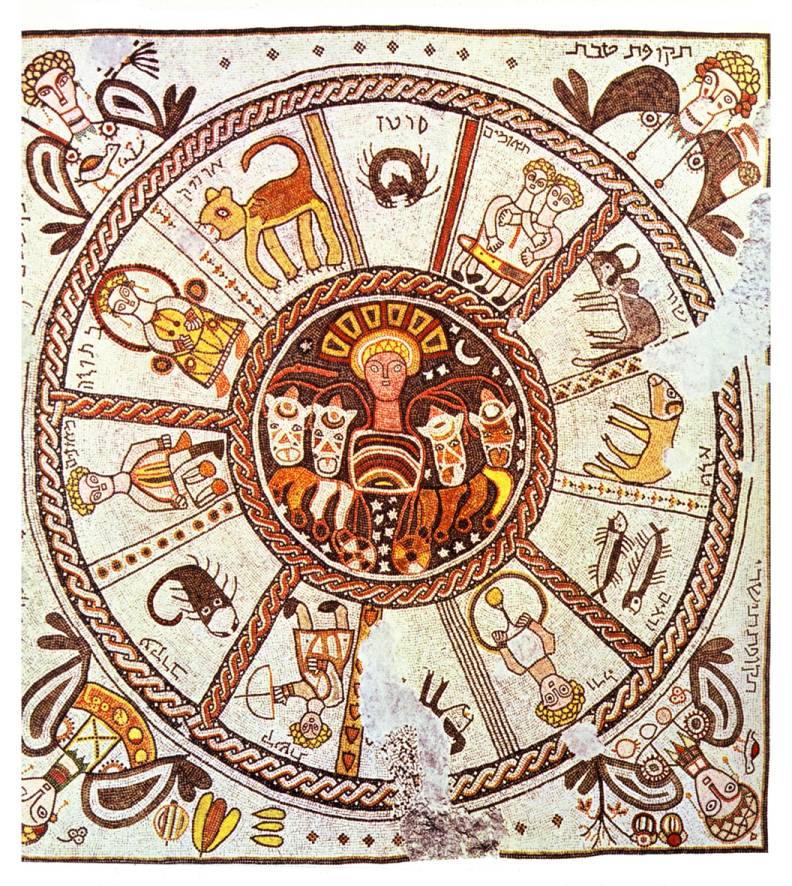
Jewish astrology
In its own language: מַזָּלוֹת (mazzālôt)
from Hebrew mazzālôt, meaning 'constellations'
A belief system within Judaism that celestial bodies influence earthly affairs and human destiny.
Jewish astrology is a tradition found in some forms of Judaism where the movements of stars and planets are believed to shape life on Earth. Rooted in ancient rabbinic debates, it holds that astral forces affect wisdom, wealth, and fate, though many scholars argue divine will can override these influences.
- Hebrew term mazzālôt means 'constellations'
- Seven classical planets govern relative hours
- Maimonides ruled against predictive astrology
- Stars influence fate but divine will overrides
- Prohibited to worship stars as deities
What it is
Jewish astrology is a system of belief present in certain strands of Judaism. It posits that celestial bodies exert influence over events on Earth and the lives of individuals. Practitioners study recurring patterns among the seven classical planets and the zodiac constellations to understand these effects. The term derives from the Hebrew word for constellations. While modern science classifies this as pseudoscience, historical Jewish texts preserve detailed records of how these astrological forecasts were calculated and interpreted by ancient sages.
Where it comes from
The practice emerged from early rabbinic discussions about the nature of destiny. Biblical references, such as Job 38:33, are cited to support the idea that heavenly laws govern the earth. Midrashic texts record teachings that every blade of grass has a constellation directing its growth. The system likely absorbed elements from Hellenistic culture, stripping away idolatrous aspects while retaining the astronomical framework. Ancient Jewish thinkers integrated these celestial mechanics into their theological understanding of the universe.
How it is done
Calculations rely on dividing day and night into twelve equal relative hours based on sunrise and sunset times. Each hour is assigned one of the seven classical planets, which govern that specific period. The sequence of planetary rulership cycles through the days of the week. Astrologers track the movement of these planets in relation to the twelve zodiac signs. Complex combinations of these factors are used to determine the specific astral influence active at any given moment for forecasting or analysis.
Tools and materials
The primary tools are the seven classical planets: Sun, Moon, Mercury, Venus, Mars, Jupiter, and Saturn. These are mapped against the twelve constellations of the Zodiac. Time is measured using relative hours rather than fixed clock time. Specific planetary spheres are linked to specific zodiac signs; for instance, the Sun is associated with Leo and the Moon with Cancer. This configuration allows practitioners to determine which celestial force is dominant during particular hours or days.
Jewish astrology, drawn and placed
- Living
- Revived
- Fading
- Historical
- Legendary
- Performed
- Lineage
- Judaism
- Timing
- by hour, week, month, or year
What it is for
The system is used to foresee future events and understand personal destiny. Some rabbis believed it could explain why individuals become wise or wealthy. It was also used to assess kinship between people born under the same star. However, a major purpose within the religious context was to distinguish between permissible knowledge of astral influences and prohibited idolatry. It served to highlight the supremacy of divine will over fixed astrological outcomes.
Who does it
Historically, this knowledge was held by rabbis, scholars, and medieval Jewish philosophers. Figures like Saadia Gaon and Abraham ibn Ezra considered it true wisdom. Others, like Maimonides, critically analyzed and often rejected its predictive power. Training involved deep study of Talmudic literature and astronomical calculations. The role was not that of a professional fortune-teller but of a learned interpreter of cosmic signs within a religious framework.
Peoples and places
The tradition is central to Jewish intellectual history, particularly in Israel and regions with significant Jewish populations like Germany and Russia. Debates occurred among sages in Babylon and Israel regarding the extent of astrological binding. While some believed Israelites were bound by horoscopes, others argued they were exempt due to their covenant with God. This distinction shaped how different Jewish communities viewed the authority of stars versus prayer and merit.
At a glance: who, where and when

What people believe
The worldview balances astral determinism with divine sovereignty. Stars are seen as instruments created by God to govern the world, not objects of worship. A key belief is that while nations may be subject to astrological fate, Israel is not strictly bound by it. Through prayer, repentance, and good deeds, individuals can alter what the stars have determined. This creates a dynamic where celestial influence exists but is ultimately subordinate to divine mercy and human action.
When it is done
Calculations follow the weekly cycle, with each planet governing a specific day. The night begins at sunset, and the planetary sequence restarts each evening. Seasonal changes affect the length of relative hours, making summer days longer and nights shorter compared to winter. The system tracks the monthly progression of zodiac constellations alongside the yearly solar cycle. Specific times, such as dawn or sunrise, mark the beginning of new astrological periods.
How scholars and sceptics see it
Modern science regards Jewish astrology as a pseudoscience lacking empirical validity. Anthropologists and historians view it as a significant part of Jewish intellectual heritage and cultural identity. Scholars note the tension between rationalist critics like Maimonides and traditionalists who accepted astrological influence. Psychological interpretations might see it as a way for individuals to find structure or meaning in uncertain times, reflecting broader human tendencies to seek patterns in the cosmos.
Cautions and what is closed
Jewish law strictly prohibits worshipping stars or treating them as deities. Consulting astrologers for guidance is forbidden if it replaces reliance on God. The tradition warns against the error of believing stars control everything absolutely. Historical figures like Abraham were reprimanded for relying too heavily on astrological predictions. The caution is theological: trusting stars over divine providence is considered a spiritual failure and a form of idolatry.
Compare and confuse
Jewish astrology shares structural similarities with Hellenistic and Babylonian astrological systems, particularly in the use of zodiac signs and planetary hours. However, it differs significantly in its theological constraints. Unlike pagan astrology, which often involved worship, Jewish astrology emphasizes monotheism. It also contrasts with later Christian and Islamic astrological traditions by maintaining a stronger emphasis on the potential nullification of fate through moral action and prayer.
Questions people ask about Jewish astrology
What is Jewish astrology?
It is a belief system in some forms of Judaism that celestial bodies influence earthly affairs and human destiny, derived from Hebrew terms for constellations.
Where does it come from?
It originates from ancient rabbinic debates and biblical texts, likely absorbing astronomical frameworks from Hellenistic culture while removing idolatrous elements.
Do Jews believe stars control everything?
Many believe stars influence fate, but tradition holds that Israel is not strictly bound by horoscopes and can alter destiny through prayer and good deeds.
Is it considered valid today?
Modern science views it as pseudoscience. Historically, it was studied by scholars, though prominent figures like Maimonides criticized its predictive claims.
Good reading and sources
The facts on this page come from the Wikipedia article "Jewish astrology", written by its contributors and used under the CC BY-SA 4.0 licence, and from its Wikidata record (CC0). EveryJaadu rewrote the text in its own words, with AI assistance, and compares every page with the article to make sure no passage is copied. It may be reused under the same CC BY-SA 4.0 licence with a link back.
It may contain mistakes. Names and customs differ from one community to the next, and some knowledge is closed to outsiders and left out here. This page describes belief and practice. It does not say that any of it works, it is not a how-to, and it is not medical advice. If something is wrong, tell us. Last refreshed 2026-10-06.
More from Israel
All the entries from Israel 🇮🇱 IsraelNumber of the beastἈριθμὸς τοῦ θηρίου
A biblical number linked to a prophetic figure and interpreted through ancient letter values.Belief · Cursing and harm Historical
🇮🇱 IsraelNumber of the beastἈριθμὸς τοῦ θηρίου
A biblical number linked to a prophetic figure and interpreted through ancient letter values.Belief · Cursing and harm Historical
 🇮🇱 Israel and 5 moreTetragrammatonיהוה
The four-letter name of God in the Hebrew Bible, written as YHWH.Belief · Speaking with spirits and the dead Living
🇮🇱 Israel and 5 moreTetragrammatonיהוה
The four-letter name of God in the Hebrew Bible, written as YHWH.Belief · Speaking with spirits and the dead Living
 🇸🇾 Syria and 5 moreBaetyl
A sacred stone, often a meteorite, believed to house a deity in ancient Near Eastern and Mediterranean traditions.Charm · Power and authority · Speaking with spirits and the dead Historical
🇮🇱 Israel and 2 moreBelialבְּלִיַּעַל
A Hebrew term for worthlessness that evolved into a demon of darkness in Jewish and Christian texts.Being · Cursing and harm Historical
🇸🇾 Syria and 5 moreBaetyl
A sacred stone, often a meteorite, believed to house a deity in ancient Near Eastern and Mediterranean traditions.Charm · Power and authority · Speaking with spirits and the dead Historical
🇮🇱 Israel and 2 moreBelialבְּלִיַּעַל
A Hebrew term for worthlessness that evolved into a demon of darkness in Jewish and Christian texts.Being · Cursing and harm Historical
Related elsewhere
All belief 🇮🇳 India and 2 morePalmistry
A divination method that interprets the lines and shapes of the hand to predict fate or reveal character.Oracle · Seeing and foretelling · Power and authority Living
🇮🇳 India and 2 morePalmistry
A divination method that interprets the lines and shapes of the hand to predict fate or reveal character.Oracle · Seeing and foretelling · Power and authority Living
 🇮🇳 India and 5 moreCowrie
A sea snail shell used as currency, divination tool, and charm across many culturesSubstance · Seeing and foretelling · Luck and prosperity Living
🇮🇳 India and 5 moreCowrie
A sea snail shell used as currency, divination tool, and charm across many culturesSubstance · Seeing and foretelling · Luck and prosperity Living
 🇪🇸 Spain and 5 moreAlfonso X of Castileel Sabio
A medieval king who sponsored astronomical tables and translated works on magic and astrology.Text · Power and authority · Seeing and foretelling Historical
🇪🇸 Spain and 5 moreAlfonso X of Castileel Sabio
A medieval king who sponsored astronomical tables and translated works on magic and astrology.Text · Power and authority · Seeing and foretelling Historical
 🇬🇹 Guatemala and 1 moreMaya mythology
The reconstructed tales of the Maya people about gods, heroes, and the creation of the world.Tradition · Seeing and foretelling · Power and authority Historical
🇬🇹 Guatemala and 1 moreMaya mythology
The reconstructed tales of the Maya people about gods, heroes, and the creation of the world.Tradition · Seeing and foretelling · Power and authority Historical