Balzac Billy
A groundhog-costumed mascot that forecasts the weather on Groundhog Day in Alberta.
Balzac Billy is a local prognosticator based in Balzac, Alberta, Canada. He appears each year on Groundhog Day to predict whether winter will persist or spring will arrive early, following the tradition of animal-based weather forecasting.
- Created by CFAC radio director Jim Kunkel in the late 1970s.
- Based in Balzac, Alberta, Canada, near Calgary.
- Represents a Richardson ground squirrel, not a true groundhog.
- Predictions are broadcast on the Ned Corrigall morning show.
- Predicted early spring in 2019 and 2025; winter in 2023, 2024, and 2026.
What it is
Balzac Billy serves as a seasonal weather predictor for the Calgary area. Dressed in a groundhog suit, he acts out the annual ritual of checking for his shadow to determine the length of winter. Although the character represents a Richardson ground squirrel because true groundhogs are not native to southern Alberta, he follows the same folklore rules as other prognosticators. The event is a lighthearted local tradition that draws attention to the changing seasons through playful performance rather than serious meteorological science.
Where it comes from
The character was created in the late 1970s by Jim Kunkel, who served as the program director for Calgary radio station CFAC. Kunkel collaborated with three announcers to develop a western-themed mascot suitable for the region. After testing several options, they settled on the name Balzac Billy, linking the figure to the nearby community of Balzac. The concept was designed to fill a gap in local folklore, providing a homegrown alternative to international weather animals.
Tools and materials
The primary tool is a groundhog costume worn by the performer. The setting is outdoors in Balzac, located just north of Calgary. Radio equipment is used to transmit the results to the audience via the Ned Corrigall morning show. The costume allows the performer to embody the animal spirit central to the folklore, bridging the gap between human performance and natural omen.
Balzac Billy, drawn and placed
- Living
- Revived
- Fading
- Historical
- Legendary
- Performed
- Timing
- Groundhog Day
What it is for
The main goal is entertainment and local engagement during the winter season. Residents look forward to the prediction as a marker of the calendar year. It provides a shared cultural moment for the community, connecting them to broader North American traditions while maintaining a distinct regional identity. The outcome is treated as a fun guess rather than a scientific certainty.
Who does it
The role is filled by performers associated with CFAC radio. Jim Kunkel initiated the project, while Paul Dunphy handled production duties and Jimmy Hughes provided the voice for the original broadcasts. Robin Ingram also participated in the creation process. The position requires someone willing to engage in public performance and deliver the forecast with appropriate dramatic flair for the radio audience.
Peoples and places
The tradition is specific to Alberta, Canada, particularly the Calgary metropolitan area. It appeals to locals who follow the station's programming and enjoy regional mascots. Unlike global prognosticators, Balzac Billy holds a special place in the hearts of Albertans due to his local origins. The practice has remained consistent since its inception, adapting slightly to include different animal representations while keeping the core name and location intact.
At a glance: who, where and when
What people believe
The underlying belief stems from the folklore surrounding Groundhog Day, which suggests that animal behavior can forecast the weather. According to this custom, seeing a shadow means winter lasts six more weeks, while hiding indicates spring is near. While modern audiences recognize this as superstition, the ritual persists as a cultural touchstone. The choice of a ground squirrel instead of a groundhog acknowledges local ecology while preserving the magical logic of the original legend.
When it is done
The event takes place annually on Groundhog Day. This date marks a traditional point in the calendar where communities pause to anticipate the end of winter. The timing aligns with the midpoint of the coldest season, making it a psychologically significant moment for residents eager for warmer weather. The consistency of the date ensures that the tradition remains a reliable fixture in the yearly cycle.
How scholars and sceptics see it
Scholars view such mascots as examples of how communities adapt global folklore to local contexts. Anthropologists note that these figures serve social functions by creating shared experiences and reinforcing regional identity. Psychologists might see the appeal in the human desire for pattern recognition and control over unpredictable natural forces. The tradition demonstrates how media can amplify simple rituals into lasting cultural icons.
Cautions and what is closed
There are no significant risks associated with the performance. The event is purely recreational and does not involve dangerous activities or medical claims. Participants wear costumes and operate within safe public spaces. The predictions are understood as entertainment, so there is no danger of people relying on them for critical planning or safety decisions. The tradition remains harmless and focused on community enjoyment.
Compare and confuse
Balzac Billy is often compared to Punxsutawney Phil, the most famous American prognosticator. Both follow the same shadow rule and serve similar roles in their respective regions. However, Billy differs by representing a ground squirrel and being tied to a radio station rather than a town club. Other local variants exist across North America, but few have the same media integration as the CFAC production. The comparison highlights how different places personalize the same basic folklore template.
Law and persecution
No legal issues surround the tradition. The event takes place in a public area and involves no restricted materials or activities. There are no permits required beyond standard public gathering allowances, if any. The tradition operates freely without interference from authorities. Its status as a charitable or promotional activity for a radio station further insulates it from regulatory scrutiny.
Days linked to Balzac Billy
Questions people ask about Balzac Billy
What is Balzac Billy?
Balzac Billy is a weather-predicting mascot dressed as a groundhog. He lives in Balzac, Alberta, Canada, and appears every Groundhog Day to forecast the remaining length of winter based on whether he sees his shadow.
Where does the tradition come from?
It originated in the late 1970s when CFAC radio program director Jim Kunkel created the character. He worked with announcers to develop a western-themed prognosticator for Calgary, naming him after the nearby community of Balzac.
Why is he a ground squirrel instead of a groundhog?
True groundhogs are not native to southern Alberta. The creators chose a Richardson ground squirrel to reflect the local wildlife while still participating in the established folklore tradition of animal-based weather prediction.
How is the prediction made?
The performer checks for a shadow on Groundhog Day. Seeing a shadow predicts six more weeks of winter. A cloudy day with no shadow signals an early spring. The result is announced live on the radio.
Good reading and sources
The facts on this page come from the Wikipedia article "Balzac Billy", written by its contributors and used under the CC BY-SA 4.0 licence, and from its Wikidata record (CC0). EveryJaadu rewrote the text in its own words, with AI assistance, and compares every page with the article to make sure no passage is copied. It may be reused under the same CC BY-SA 4.0 licence with a link back.
It may contain mistakes. Names and customs differ from one community to the next, and some knowledge is closed to outsiders and left out here. This page describes belief and practice. It does not say that any of it works, it is not a how-to, and it is not medical advice. If something is wrong, tell us. Last refreshed 2026-10-07.
More from Canada
All the entries from Canada 🇺🇸 United States and 1 moreGroundhog DayGrund'sau dåk
A North American custom using a burrowing rodent to forecast the end of winterTradition · Seeing and foretelling · Luck and prosperity Living
🇺🇸 United States and 1 moreGroundhog DayGrund'sau dåk
A North American custom using a burrowing rodent to forecast the end of winterTradition · Seeing and foretelling · Luck and prosperity Living
 🇺🇸 United States and 3 moreMediumship
The practice of mediating communication between the living and spirits of the dead.Tradition · Speaking with spirits and the dead Living
🇺🇸 United States and 3 moreMediumship
The practice of mediating communication between the living and spirits of the dead.Tradition · Speaking with spirits and the dead Living
 🇺🇸 United States and 1 morePunxsutawney Phil
A groundhog who serves as the central figure in an annual American weather prediction festival.Belief · Seeing and foretelling · Wonder and entertainment Living
🇺🇸 United States and 1 morePunxsutawney Phil
A groundhog who serves as the central figure in an annual American weather prediction festival.Belief · Seeing and foretelling · Wonder and entertainment Living
Related elsewhere
All illusion 🇬🇧 United Kingdom and 2 moreKing ArthurBrenin Arthur
A legendary British king and folk hero of medieval literature and Welsh mythologyFigure · Power and authority · Wonder and entertainment Legendary
🇬🇧 United Kingdom and 2 moreKing ArthurBrenin Arthur
A legendary British king and folk hero of medieval literature and Welsh mythologyFigure · Power and authority · Wonder and entertainment Legendary
 🇪🇬 Egypt and 1 moreSphinx
A mythical hybrid with a human head and lion body, serving as guardian or riddler in Egyptian and Greek traditions.Being · Protection · Wonder and entertainment Legendary
🇪🇬 Egypt and 1 moreSphinx
A mythical hybrid with a human head and lion body, serving as guardian or riddler in Egyptian and Greek traditions.Being · Protection · Wonder and entertainment Legendary
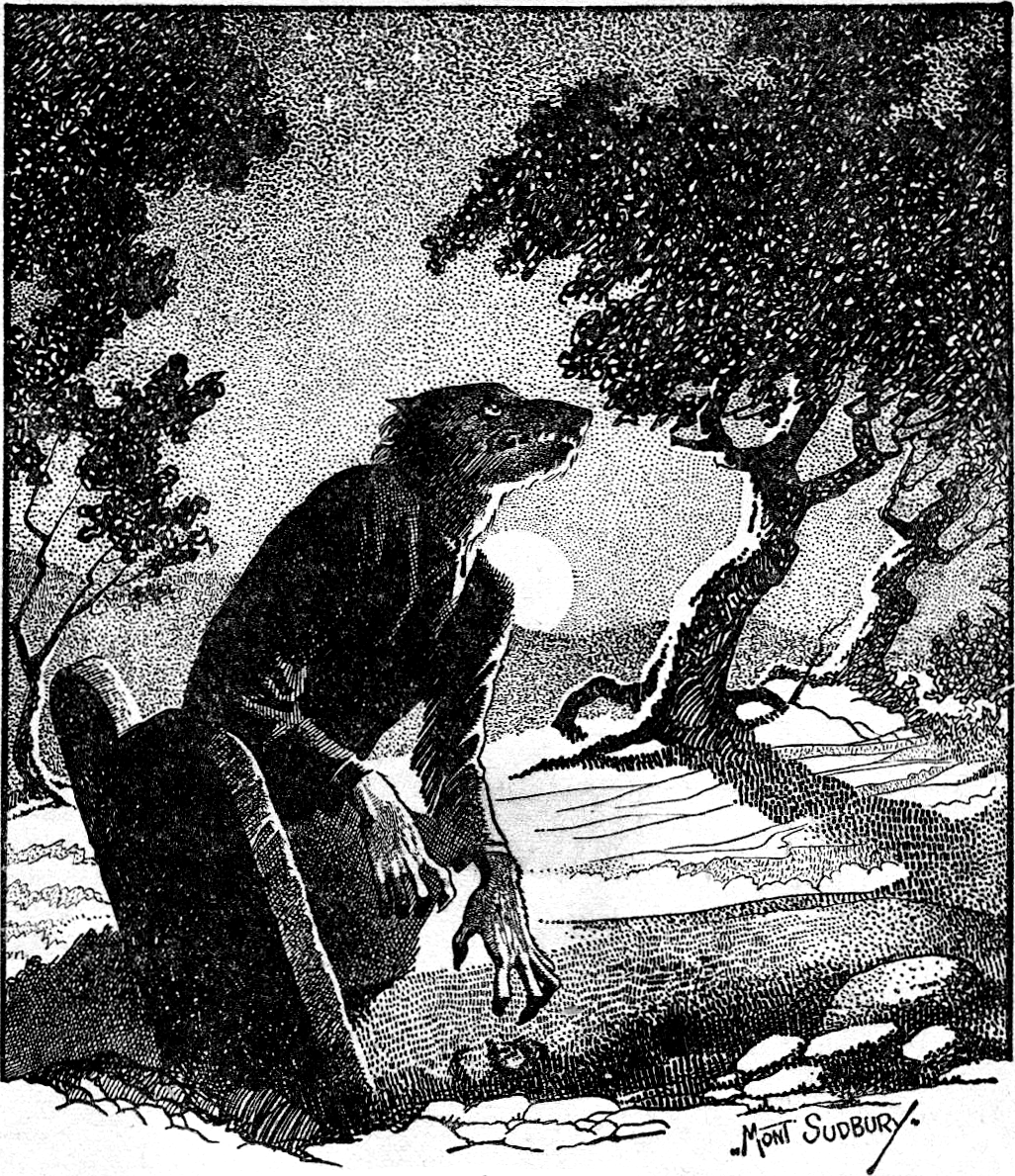 🇫🇷 France and 5 moreWerewolf
A mythical shapeshifter that turns into a wolf, central to European witch-hunts and Gothic horror.Being · Cursing and harm · Wonder and entertainment Legendary
🇫🇷 France and 5 moreWerewolf
A mythical shapeshifter that turns into a wolf, central to European witch-hunts and Gothic horror.Being · Cursing and harm · Wonder and entertainment Legendary
 🇪🇸 Spain and 5 moreSt John's Eve
A Christian vigil marked by bonfires and plant gathering on the summer solstice eveRite · Protection · Speaking with spirits and the dead Living
🇪🇸 Spain and 5 moreSt John's Eve
A Christian vigil marked by bonfires and plant gathering on the summer solstice eveRite · Protection · Speaking with spirits and the dead Living