Christian: magic in this belief world
Blessings, saints' relics, exorcism, folk charms and the long Church argument about magic.
Christianity has had a long, tense relationship with magic. The Church blessed objects, honoured saints and relics, performed exorcisms, and also condemned sorcery and witchcraft. Folk Christianity around the world mixes prayer, charms, holy water, saints' medals and healing rites. This page covers how Christian churches have defined, absorbed and punished magic, and how the story differs across continents. Christianity includes Catholic, Orthodox, Protestant, Pentecostal and independent African and Asian churches, each with its own view of magic.
Blessing and the sacramental world
Catholic and Orthodox Christianity have a rich set of blessings and sacramentals: holy water, candles, medals, icons, relics and the sign of the cross. Believers hold that these work through God and the Church, not by themselves. Protestants largely rejected this system as superstition, and Pentecostals have developed their own deliverance and healing practice. The Orthodox churches give the blessing of homes, boats and fields a central place, and Catholic practice includes pilgrimage, processions and prayer to saints for specific needs, such as St Jude for hard cases.
Exorcism, witch trials and the Church
The Church has a formal rite of exorcism, used rarely and by authorised priests. European witch trials, which involved both Catholic and Protestant courts, killed tens of thousands between about 1450 and 1750. Historians such as Brian Levack stress that most trials were run by secular authorities. Modern accusations by some churches against children in parts of Africa have led to abuse. Protestant reformers broke with this system, and from the sixteenth century the burning of witches was supported by many Protestant authorities and many Catholic ones, though other clergy and judges spoke against it.
Missions and renaming
Missionaries often labelled Indigenous religions as devil worship and fetishism, and suppressed rites. In Latin America and Africa, many practices went underground or fused with Christianity: Santeria with Catholic saints, Vodou with Catholic imagery, Andean offerings with saints' days. Independent African churches and the Brazilian Spiritists grew from these meetings. Pentecostal and charismatic churches, which have grown fast in Africa, Latin America and Asia, offer healing, prophecy and deliverance as part of their worship, and are criticised by some for demonising local traditions.
Folk practice and today
Folk Christianity includes St Anthony charms for lost items, the St Christopher medal for travel, the Orthodox Easter fire, and the Mexican cult of Santa Muerte, which the Church rejects. Prosperity preaching sells faith-linked results, and some pastors charge for miracles. Scholars note that the line between religion and magic was drawn largely by Christian writers. Historians, such as Eamon Duffy and Keith Thomas, have shown that medieval Christianity was shot through with practices that later reformers redefined as magic.
Christian on EveryJaadu
The entries written up so far, best known first.
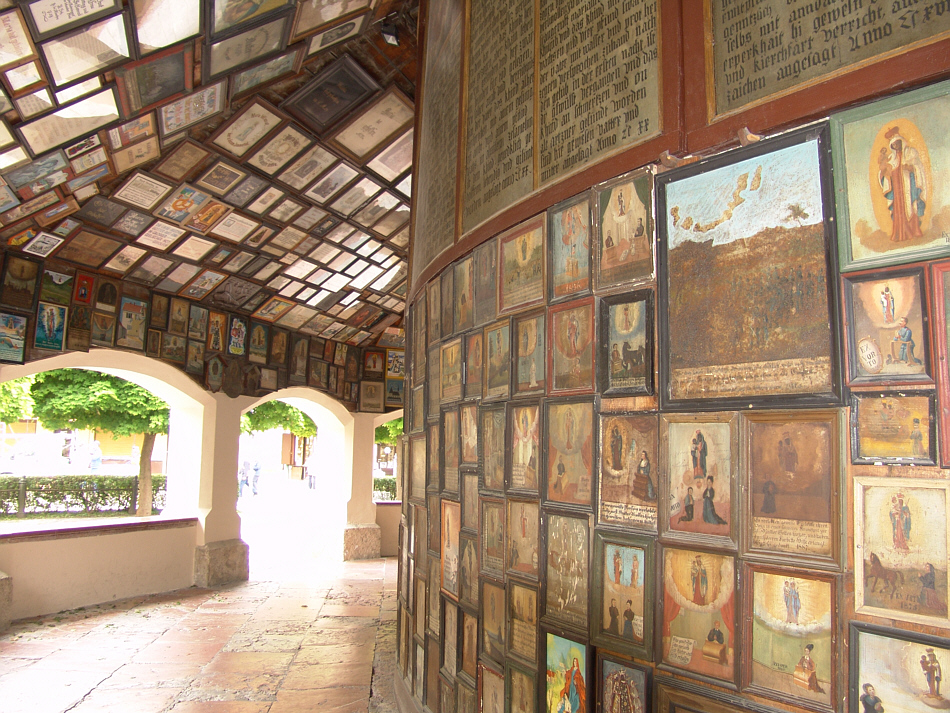 🇬🇷 Greece and 5 moreVotive offering
Objects left in sacred places to honor a deity or fulfill a vow, never to be recovered.Tradition · Protection · Healing Living
🇬🇷 Greece and 5 moreVotive offering
Objects left in sacred places to honor a deity or fulfill a vow, never to be recovered.Tradition · Protection · Healing Living
 🇬🇷 Greece and 5 moreNecromancy
A form of divination that seeks to speak with the dead for hidden knowledge.Tradition · Seeing and foretelling · Power and authority Historical
🇬🇷 Greece and 5 moreNecromancy
A form of divination that seeks to speak with the dead for hidden knowledge.Tradition · Seeing and foretelling · Power and authority Historical
 🇮🇪 Ireland and 5 moreHoly well
A water source revered for healing and ritual across pagan and Christian traditionsTradition · Healing · Speaking with spirits and the dead Living
🇬🇧 United KingdomCharmer
English folk healers who used gifts or verses to treat natural ailments without chargeTradition · Healing Historical
🇮🇪 Ireland and 5 moreHoly well
A water source revered for healing and ritual across pagan and Christian traditionsTradition · Healing · Speaking with spirits and the dead Living
🇬🇧 United KingdomCharmer
English folk healers who used gifts or verses to treat natural ailments without chargeTradition · Healing Historical
 🇬🇧 United Kingdom and 4 moreCunning folk
European practitioners of folk medicine and helpful magic from the Middle Ages to the twentieth centuryTradition · Protection · Healing Historical
🇬🇧 United Kingdom and 4 moreCunning folk
European practitioners of folk medicine and helpful magic from the Middle Ages to the twentieth centuryTradition · Protection · Healing Historical
 🇬🇧 United Kingdom and 1 moreMagic in Anglo-Saxon Englandgaldorcræft
Healing charms and protective rituals practiced by early English tribesTradition · Healing · Protection Historical
🇬🇧 United Kingdom and 1 moreMagic in Anglo-Saxon Englandgaldorcræft
Healing charms and protective rituals practiced by early English tribesTradition · Healing · Protection Historical
 🇮🇹 ItalySegnature
An Italian folk healing rite using gestures and prayers to cure illness and remove cursesRite · Healing · Protection Living
🇮🇹 ItalySegnature
An Italian folk healing rite using gestures and prayers to cure illness and remove cursesRite · Healing · Protection Living
 🇬🇷 Greece and 3 moreExorcist
A religious specialist who performs rites to remove alleged demonic possession from people or places.Tradition · Cursing and harm · Cleansing and purification Living
🇬🇷 Greece and 3 moreExorcist
A religious specialist who performs rites to remove alleged demonic possession from people or places.Tradition · Cursing and harm · Cleansing and purification Living
Photo credits on this page
The small pictures above come from Wikimedia Commons under free licences. Some are cropped to fit.
- Bald's Leechbook: Unknown, the Internet Archive scan is low quality, and some of the tex, Public domain, source
- Necromancy: Unknown author, CC BY 4.0, source
- Exorcism: Francisco Goya, Public domain, source
- Segnature: SeAnstapa, CC0, source
- Cunning folk: Midnightblueowl at English Wikipedia, CC BY-SA 3.0, source
- Votive offering: Walter J. Pilsak, Waldsassen ( W.J.Pilsak at de.wikipedia ), CC BY-SA 3.0, source
- Holy well: The Speckled Bird, CC BY-SA 4.0, source