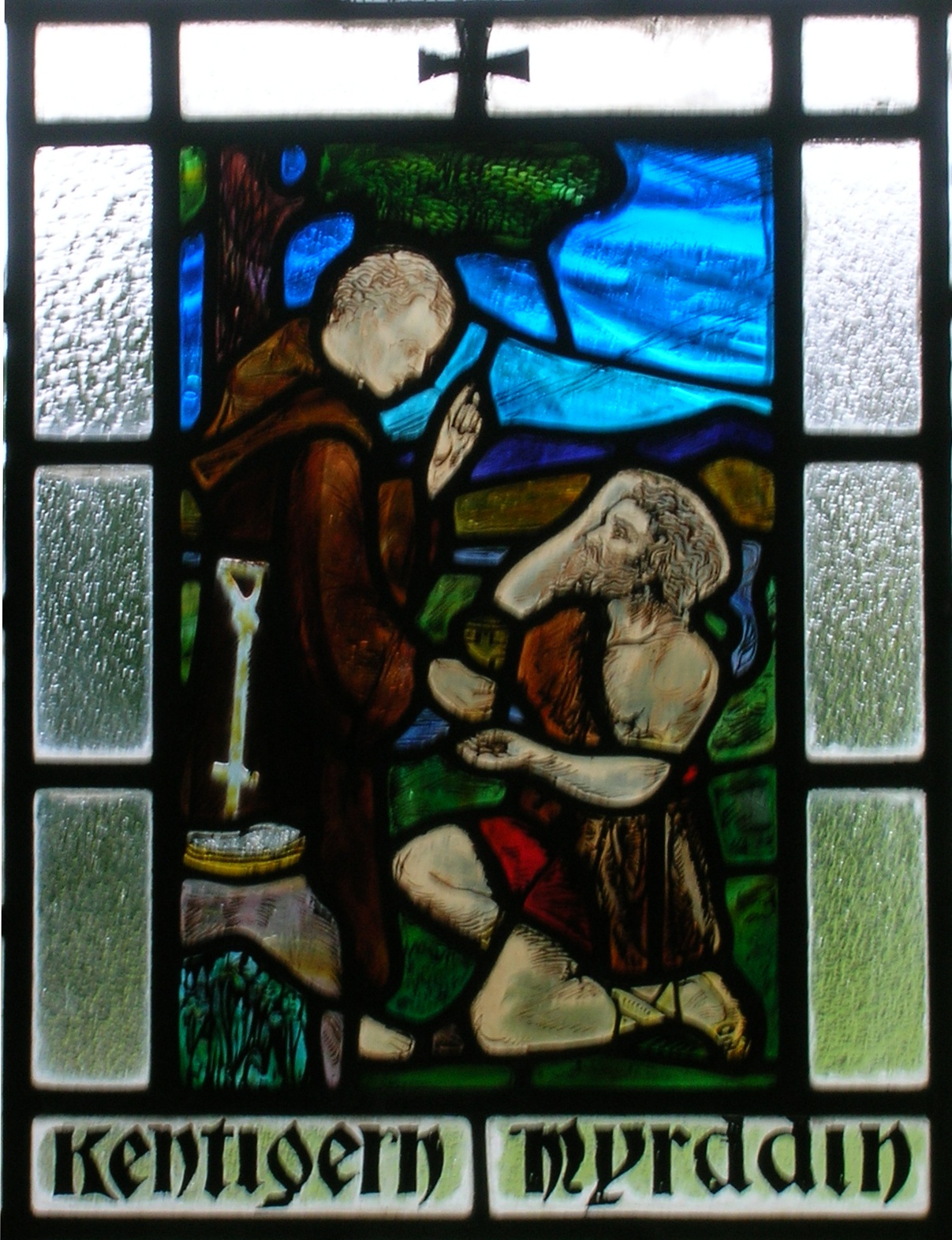
Myrddin Wyllt
from Welsh myrddin, meaning wild or mad
A wild prophet of Welsh legend who inspired the wizard Merlin
Myrddin Wyllt is a figure from medieval Welsh legend described as a chief bard and prophet who went mad after battle. He fled into the forests to live with beasts, where he received the gift of prophecy. Later writers merged his story with that of Merlin, the court magician of King Arthur.
- Myrddin went mad after the Battle of Arfderydd in 573.
- He lived in the Celyddon Forest with wild beasts.
- He received the gift of prophecy while in exile.
- Geoffrey of Monmouth merged him with the wizard Merlin.
- Gerald of Wales considered Myrddin Wyllt separate from Merlin.
What it is
Myrddin Wyllt is a central character in medieval Welsh legend. He is portrayed as a chief bard and a prophet who lost his mind following a great war. After fleeing into the Celyddon Forest, he lived among wild animals and gained the ability to see the future. His story represents the Celtic wild man archetype. Over time, later writers combined his identity with that of Merlin, the famous magician at King Arthur's court. In early Welsh texts, Myrddin was distinct from the Arthurian wizard, but they eventually became indistinguishable in popular literature.
Where it comes from
The legend is rooted in historical events around the year 573. Myrddin supposedly went mad after the Battle of Arfderydd, where the Brythonic king Gwenddoleu was defeated by Rhydderch Hael of Strathclyde. The Annales Cambriae records this battle date. Myrddin fled the violence into the woods. Some scholars link him to Lailoken, a north-British figure in the Life of Kentigern. A fifteenth-century text identifies Lailoken as Myrddin, placing his death near the River Tweed. The nickname Myrddin Wyllt appears in later poetry and chronicles before 1500.
Myrddin Wyllt, drawn and placed
- Living
- Revived
- Fading
- Historical
- Legendary
- Performed
- Lineage
- Welsh mythology
What it is for
Myrddin serves as a source of prophecy and poetic wisdom. He speaks verses about the past and future in ancient manuscripts like the Black Book of Carmarthen. His prophecies cover political shifts and invasions. He warns of Norman conquest and predicts the survival of the Britons. His role is to voice the grief and hope of his people through verse. He acts as a bridge between the human world and the spiritual insights found in the wilderness.
Who does it
Scholars study the poems attributed to Myrddin to understand early Welsh culture. The texts are preserved in manuscripts such as the Red Book of Hergest. Researchers debate whether Myrddin and Lailoken are the same person. They also examine the relationship between Myrddin and other bards like Taliesin. The tradition relies on literary reconstruction rather than living practice.
Peoples and places
The legend belongs primarily to the Welsh and their Brythonic ancestors. It is deeply tied to the history of Strathclyde and northern Britain. Welsh poets kept the memory alive through centuries of oral and written tradition. The story spread to Scotland through figures like Lailoken. Later French and English writers adapted the tale for Arthurian romance.
At a glance: who, where and when
What people believe
The worldview behind Myrddin involves the power of the forest and the madness of trauma. Going mad is seen as a transformation that grants prophetic vision. The wild man lives outside society but retains deep knowledge. Spirits and beasts are his companions. The legend suggests that truth can be found in exile and nature. Prophecy is a burden given by fate after witnessing horror.
How scholars and sceptics see it
Historians analyze the Battle of Arfderydd to ground the myth in reality. They compare Myrddin to other wild men in European folklore. Scholars note that Gerald of Wales distinguished Myrddin Emrys from Myrddin Wyllt. Geoffrey of Monmouth merged them into one character. Modern researchers look at the poems to trace the evolution of the legend from history to fantasy.
Compare and confuse
Myrddin is often confused with Merlin Ambrosius. Early Welsh tradition kept them separate. One was a wild prophet, the other a court magician. The name Myrddin Wyllt means wild or mad. This distinguishes him from the civilized wizard of later romances. The Scottish figure Lailoken shares many traits with Myrddin.
Today
The legend survives in Welsh literature and modern adaptations. Writers continue to retell the story of the wild prophet. Academic interest remains high in the original Middle Welsh poems. The character influences contemporary fantasy and historical fiction.
Questions people ask about Myrddin Wyllt
Who is Myrddin Wyllt?
Myrddin Wyllt is a figure from medieval Welsh legend. He is a chief bard and prophet who went mad after battle. He fled into the forest and gained the gift of prophecy. His story inspired the wizard Merlin.
Where does the legend come from?
The legend comes from medieval Wales and northern Britain. It is based on the Battle of Arfderydd in 573. Poems in the Black Book of Carmarthen preserve his words. Later writers added details about his life in the woods.
How is Myrddin different from Merlin?
Early Welsh texts treat them as separate. Myrddin is a wild prophet who lives in the forest. Merlin is a court magician at King Arthur's table. Geoffrey of Monmouth later merged the two identities into one character.
What did Myrddin predict?
Myrddin predicted political changes and invasions. He foresaw the Norman conquest of Wales. He also expressed hope that the Britons would eventually overcome their enemies. His verses warn of future dangers.
Good reading and sources
- Encyclopaedia BritannicaArticle
- Add MS 14907 - British Library Archives and Manuscripts CatalogueBritish Library, Article
The facts on this page come from the Wikipedia article "Myrddin Wyllt", written by its contributors and used under the CC BY-SA 4.0 licence, and from its Wikidata record (CC0). EveryJaadu rewrote the text in its own words, with AI assistance, and compares every page with the article to make sure no passage is copied. It may be reused under the same CC BY-SA 4.0 licence with a link back.
It may contain mistakes. Names and customs differ from one community to the next, and some knowledge is closed to outsiders and left out here. This page describes belief and practice. It does not say that any of it works, it is not a how-to, and it is not medical advice. If something is wrong, tell us. Last refreshed 2026-10-05.
More from the United Kingdom
All the entries from the United Kingdom 🇬🇧 United Kingdom and 2 moreKing ArthurBrenin Arthur
A legendary British king and folk hero of medieval literature and Welsh mythologyFigure · Power and authority · Wonder and entertainment Legendary
🇬🇧 United Kingdom and 2 moreKing ArthurBrenin Arthur
A legendary British king and folk hero of medieval literature and Welsh mythologyFigure · Power and authority · Wonder and entertainment Legendary
 🇬🇧 United KingdomMatthew Hopkins
The English witch-hunter who led the deadliest wave of executions in Britain.Figure · Cursing and harm Historical
🇬🇧 United KingdomMatthew Hopkins
The English witch-hunter who led the deadliest wave of executions in Britain.Figure · Cursing and harm Historical
 🇬🇧 United Kingdom and 2 moreExcalibur
The mythical sword of King Arthur, symbolizing rightful sovereignty and magical power.Figure · Power and authority Legendary
🇬🇧 United Kingdom and 1 moreSamuel Liddell MacGregor Mathers
British occultist and co-founder of the Hermetic Order of the Golden DawnFigure Historical
🇬🇧 United Kingdom and 2 moreExcalibur
The mythical sword of King Arthur, symbolizing rightful sovereignty and magical power.Figure · Power and authority Legendary
🇬🇧 United Kingdom and 1 moreSamuel Liddell MacGregor Mathers
British occultist and co-founder of the Hermetic Order of the Golden DawnFigure Historical
Related elsewhere
All figure 🇮🇳 India and 5 moreAstrology
A divinatory practice that reads human fate through the positions of celestial bodies.Belief · Seeing and foretelling · Luck and prosperity Living
🇮🇳 India and 5 moreAstrology
A divinatory practice that reads human fate through the positions of celestial bodies.Belief · Seeing and foretelling · Luck and prosperity Living
 🇮🇳 India and 2 morePalmistry
A divination method that interprets the lines and shapes of the hand to predict fate or reveal character.Oracle · Seeing and foretelling · Power and authority Living
🇮🇳 India and 2 morePalmistry
A divination method that interprets the lines and shapes of the hand to predict fate or reveal character.Oracle · Seeing and foretelling · Power and authority Living
 🇨🇳 China and 3 moreTang-ki童乩 (tóngjī); 乩童 (jītóng)
A Chinese folk-religion medium whose body a deity is held to take overTradition · Speaking with spirits and the dead · Seeing and foretelling Living
🇨🇳 China and 3 moreTang-ki童乩 (tóngjī); 乩童 (jītóng)
A Chinese folk-religion medium whose body a deity is held to take overTradition · Speaking with spirits and the dead · Seeing and foretelling Living
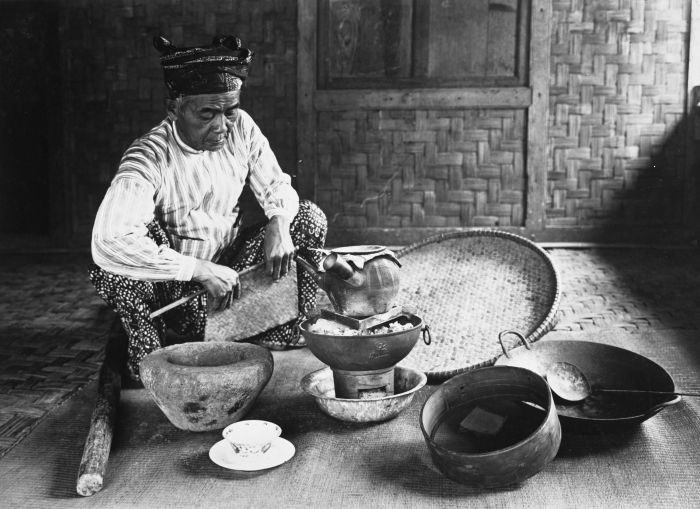 🇮🇩 Indonesia and 2 moreDukun
A traditional healer and spirit medium in Indonesian folk practiceTradition · Healing · Seeing and foretelling Living
🇮🇩 Indonesia and 2 moreDukun
A traditional healer and spirit medium in Indonesian folk practiceTradition · Healing · Seeing and foretelling Living